
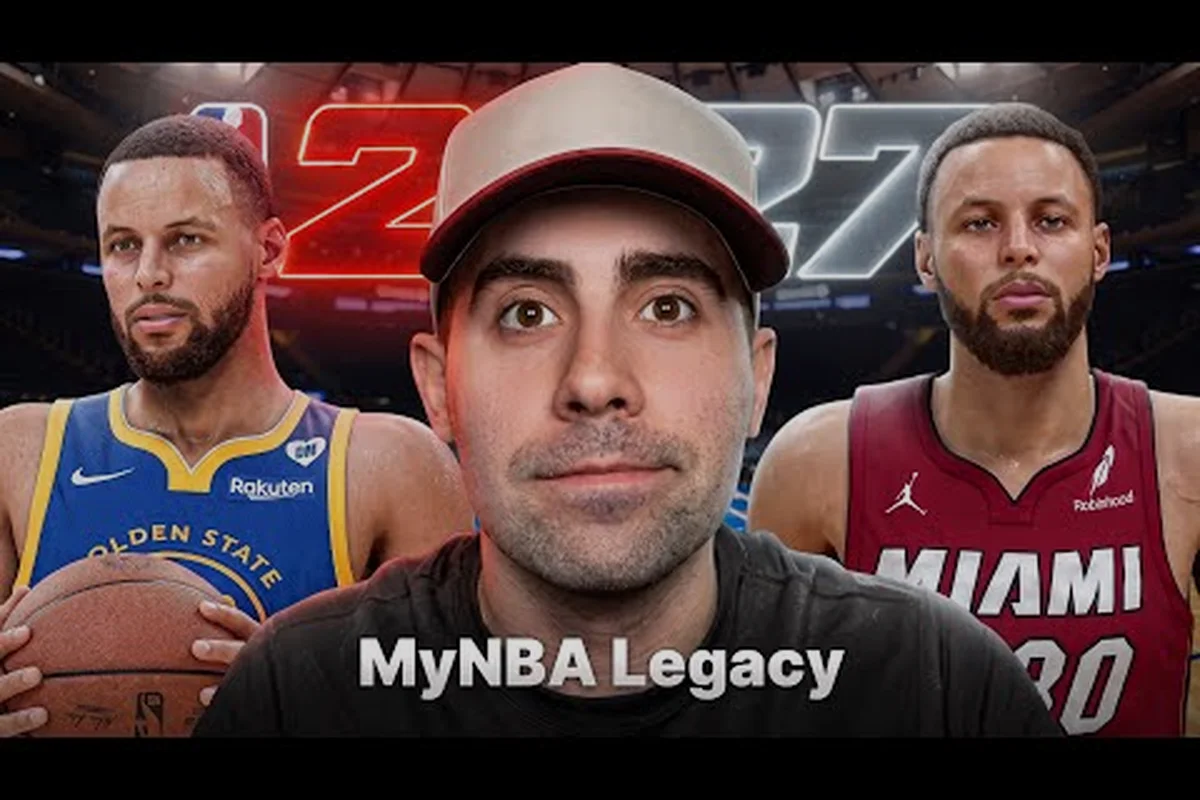
The MyNBA Era modes in NBA 2K27 deliver an unprecedented journey through basketball history, letting you step into three of the most iconic decades in professional basketball. Whether you want to build championship dynasties during Michael Jordan's dominant run with the Chicago Bulls, craft Kobe Bryant's legacy with the Los Angeles Lakers across two unforgettable eras, or orchestrate LeBron James's career arc from Cleveland to multiple championships, these modes offer unmatched depth and authenticity. The feature captures not just player rosters but the very essence of how the game was played—different pacing, varying defensive philosophies, and rule sets that defined each era. This comprehensive exploration explains everything you need to know about jumping into these historic simulations, from roster construction to the strategic nuances that separate championship runs from disappointing seasons. From roster construction to the strategic nuances that separate championship runs from disappointing seasons, and our Mynba guide covers the essential roster construction principles that drive long-term success in historic simulations.
Understanding MyNBA Era Modes: What Sets Each Timeline Apart
The MyNBA Era modes represent more than simple roster updates—they reconstruct the competitive landscape of professional basketball across three distinct periods. Each era brings its own rhythm, with the Jordan era emphasizing physical play and isolation-heavy offenses, the Kobe era bridging the transition to more sophisticated ball movement, and the LeBron era showcasing the modern emphasis on pace and three-point volume. The game engine adapts to reflect these differences, meaning your coaching strategies must evolve accordingly rather than applying one-size-fits-all tactics.
Each timeline presents a curated roster of approximately 30 historic teams, complete with accurate player ratings, tendencies, and signature animations. The roster accuracy extends beyond star players to role players, bench contributors, and even players who appeared in just a handful of games during those seasons. This attention to detail means you'll encounter the same challenges teams faced historically—whether that's finding a reliable secondary scorer behind an aging superstar or managing a deep roster with conflicting personalities in the locker room.
The era-specific rule changes create dramatic shifts in how you approach both player acquisition and in-game strategy. The Jordan era features hand-checking allowed on the perimeter, which directly impacts how you deploy isolation specialists and defend against driving lanes. The Kobe era introduces gradual defensive three-second violations while maintaining physical interior play. The LeBron era reflects today's modern game with spacing priorities and positionless basketball concepts that fundamentally change roster construction philosophy.
The Michael Jordan Era: Championship Genetics and Defensive Intensity
The NBA 2K27 MyNBA Jordan era captures the ruthless efficiency of six championship runs between 1991 and 1998. The Chicago Bulls roster under Scottie Pippen and Phil Jackson's triangle offense becomes your template for success, but competing against dynasty-level talent requires understanding what made that era special. Defensive schemes emphasized physicality, with hand-checking allowing perimeter players to mirror elite scorers step-for-step while interior defenders protected the paint without worrying about defensive three-second violations.
The 1996 Bulls team stands as the gold standard for era-appropriate construction, combining Jordan's scoring prowess with Pippen's two-way excellence and Dennis Rodman's rebounding mastery. However, the mode doesn't limit you to riding Chicago's dominance—you can rebuild struggling franchises like the Charlotte Hornets or Minnesota Timberwolves using period-appropriate talent. The challenge lies in acquiring players whose skill sets match era expectations rather than forcing modern basketball concepts onto historic rosters.
The Jordan era's salary cap structure operated differently than today's maximum contract landscape, creating unique team-building opportunities. Mid-tier players commanded smaller contracts relative to superstars, meaning you can construct deeper rosters by leveraging value contracts on reliable role players. The trade deadline dynamics also reflect era-specific thinking, with teams more likely to hold onto veteran contributors rather than pivoting toward youth movements as frequently as modern franchises do.
| Era Feature | Jordan Era (1991-1998) | Kobe Era (2000-2010) | LeBron Era (2011-Present) |
|---|---|---|---|
| Hand-checking | Allowed | Restricted | Prohibited |
| Pace Rating | 92-98 | 94-100 | 98-106 |
| Three-Point Frequency | Low (12-18 attempts) | Medium (18-25 attempts) | High (25-40 attempts) |
| Defensive Three-Second | Not Enforced | Transitioning | Strictly Enforced |
| Positionless Concepts | Minimal | Emerging | Primary |
The Kobe Bryant Era: The Laker Dynasty and Strategic Evolution
The NBA 2K27 MyNBA Kobe era spans the Shaquille O'Neal three-peat and Kobe's subsequent championship runs, representing a transitional period in professional basketball. The Los Angeles Lakers under Phil Jackson's triangle offense dominated the early 2000s, but the mode lets you explore how other franchises could have challenged that supremacy. The San Antonio Spurs with Tim Duncan, the Detroit Pistons' defensive identity, and the Boston Celtics' Big Three all present viable championship paths with distinct playstyles.
| Superstar Pairing | Team | PPG Combined | Defensive Rating | Championship Windows | Playstyle Synergy |
|---|---|---|---|---|---|
| Shaquille O'Neal + Kobe Bryant | Los Angeles Lakers | 54.2 | 98 | 2000-2002 (3 titles) | Inside Force + Perimeter Anchor |
| Tim Duncan + David Robinson | San Antonio Spurs | 42.8 | 97 | 1999, 2003, 2005 | Post Presence + Rim Protector |
| Karl Malone + John Stockton | Utah Jazz | 48.6 | 94 | 1997-1998 (2 Finals) | Paint Dominator + Floor General |
| Rasheed Wallace + Chauncey Billups | Detroit Pistons | 38.4 | 99 | 2004 | Versatile Big + Clutch Commander |
| Kevin Garnett + Paul Pierce | Boston Celtics | 44.2 | 96 | 2008 | Defensive Anchor + Shot Creator |
The Kobe era introduces hybrid defensive schemes that weren't fully developed during Jordan's time but hadn't yet evolved into the sophisticated switching systems of modern basketball. This creates interesting roster construction opportunities where versatility becomes more valuable than pure positional size. Players like Grant Hill, Jason Kidd, and Kevin Garnett exemplify the new breed of two-way contributors who could impact games across multiple statistical categories without specializing in a single area.
The Lakers' dynasty construction serves as an instructional template for era-appropriate team building. The Shaq-Kobe combination demonstrates how complementary superstars with different skill sets can create overwhelming advantages, but the mode also challenges you to find similar pairings elsewhere. The Utah Jazz with Karl Malone and John Stockton, the Portland Trail Blazers with their deep 2000 roster, and even the emerging Sacramento Kings offer alternative paths to championship contention using period-appropriate talent and coaching philosophies.
Fantasy scenarios become particularly engaging during this era, allowing you to explore "what-if" propositions that never occurred historically. Could the 2004 Lakers have maintained cohesion if circumstances differed? What if the Sacramento Kings won the controversial 2002 Western Conference Finals? The NBA 2K27 MyNBA fantasy draft within this era lets you completely reshape rosters while maintaining the rule set and competitive balance of the period, creating entirely new narratives within a historically accurate framework.
The LeBron James Era: Modern Basketball Dynamics and Positionless Strategy
The NBA 2K27 MyNBA LeBron era represents the most complex simulation challenge, reflecting today's sophisticated basketball thinking while preserving the competitive integrity of recent history. LeBron's career arc from the Cleveland Cavaliers' early struggles through Miami's superteam experiment, returning to Cleveland, and eventually joining the Los Angeles Lakers creates multiple distinct phases, each requiring different strategic approaches. The mode captures not just player abilities but the evolution in team-building philosophy that LeBron himself influenced across the league.
Modern defensive concepts dominate this era, with switching schemes, zone defenses, and sophisticated help rotations requiring more nuanced offensive execution. The three-point revolution means spacing becomes paramount, making traditional low-post players less valuable than in previous eras. Players like Stephen Curry, Klay Thompson, and the Splash Brothers fundamentally changed how franchises evaluate shooting efficiency, and the mode reflects this through updated player tendencies and team offensive systems.
The LeBron era's player development systems align with what players expect from modern franchise modes, featuring detailed contract structures, max salary designations, and rookie scale contracts that impact long-term roster planning. Superstars command maximum contracts while role players are evaluated based on positional versatility and three-point shooting percentages rather than traditional post-up ability. This creates a fundamentally different challenge than Jordan or Kobe era modes, where different skill combinations held value.
| Era Comparison | Jordan | Kobe | LeBron |
|---|---|---|---|
| Championship Teams | 6 unique franchises | 7 unique franchises | 8+ unique franchises |
| Superstar Concentration | High (2-3 per contender) | Medium (2-4 per contender) | Variable (1-5 per contender) |
| Trade Market Activity | Moderate | High | Very High |
| Draft Class Depth | Deep at all positions | Deep at guard/wing | Deep at forward/center |
| Free Agency Impact | Low | Medium | Very High |
Historic Teams Deep Dive: Building Within Era Constraints
The NBA 2K27 MyNBA historic teams feature extends beyond simple roster access, offering detailed analytics on how each team performed historically and where they can be improved within simulation parameters. The 1995-96 Chicago Bulls posted a 72-10 regular season record, and the mode breaks down what made that team special: Jordan's scoring efficiency, Pippen's defensive versatility, Rodman's rebounding dominance, and the supporting cast's ability to execute the triangle offense without requiring touches. Understanding these components helps you evaluate realistic improvement paths for other franchises.
Historic teams span the full competitive spectrum, meaning some rosters require significant work before becoming championship contenders. The 1993 Orlando Magic featuring Shaq and Penny Hardaway present raw talent without the supporting cast to compete with elite teams, while the 2015 Golden State Warriors with their death lineup represent near-peak construction. The mode lets you experience both scenarios—building from mediocrity and fine-tuning excellence—without losing the era-specific flavor that makes each timeline feel distinct.
Player ratings accurately reflect career trajectories, meaning a rookie Tim Duncan in 1997 won't immediately dominate like his prime self in 2003. This developmental authenticity requires patience when building around young talent, creating realistic timelines for championship contention that mirror actual franchise histories. The mode rewards strategic planning over instant gratification, as forcing快速成功 often results in cap complications and locker room dysfunction that undermine long-term sustainability.
MyNBA Fantasy Draft: Reshaping History Within Era Boundaries
The NBA 2K27 MyNBA fantasy draft feature within Era modes offers unprecedented creative freedom while maintaining competitive balance. Unlike standard franchise modes where you're limited to existing rosters, fantasy drafts let you construct entirely new superteams using talent from across the selected era. Want to see how a Jordan-LeBron hybrid team would compete in the 1990s? The fantasy draft makes it possible while respecting era-specific rules and playstyles.
Fantasy draft settings allow you to customize difficulty parameters, including whether all players from the selected era are available, whether certain players are restricted to their actual teams, and how contract situations affect draft eligibility. These options create different strategic experiences—from pure fantasy construction to more realistic "what-if" scenarios where you work within plausible limitations like actual team situations and salary expectations.
The draft board interface presents players with their era-appropriate ratings and tendencies, helping you make informed decisions based on how each player would actually perform in that era's system. A player who's elite in the LeBron era might not translate as effectively to Jordan-era basketball due to physicality differences and scheme requirements, while reverse translations can create dominant superteams that exploit mismatches the original era never anticipated.
Adapting Strategy to Era-Specific Rules and Pace Differences
Understanding rule differences across eras proves essential for sustained success in MyNBA Era modes. The hand-checking rules during Jordan's era mean slower, more physical games where driving to the basket requires elite athleticism and body control. Attempting to play the same pace as LeBron-era offenses results in significant turnovers and missed shots, as your players' ratings and tendencies are calibrated for different defensive environments.
The Kobe era presents a transitional challenge where traditional big men still hold value but shooting guards and small forwards increasingly influence outcomes. The mode reflects this through balanced position ratings and playstyle tendencies that reward versatile players over specialists. Building a roster around a dominant center remains viable, but surrounding that big man with shooters and playmakers becomes increasingly important as the era progresses toward more perimeter-oriented basketball.
Modern analytics influence every aspect of the LeBron era, from shot selection to defensive scheme selection. The mode tracks three-point attempt rates, paint touches, and mid-range frequency, rewarding strategies that align with efficiency data from that period. Playing outdated basketball concepts—like constant post-ups without spacing threats—results in measurable production drops that compound over an 82-game season and playoff series.
Advanced Era Dominance: Exploiting Timeline-Specific Mechanics
Long-term planning separates championship builders from also-rans in MyNBA Era modes. Each era has distinct draft class strengths and weaknesses, meaning the paths to acquiring elite talent vary significantly. Jordan-era drafts featured exceptional big men and wings, Kobe-era drafts produced versatile guards and athletic forwards, while LeBron-era drafts emphasize positionless players with shooting versatility. Aligning your roster construction strategy with these era-specific tendencies creates natural talent pipelines.
Contract management requires different approaches across eras. The Jordan era's lower salary cap relative to team revenue means superstars consume a smaller percentage of cap space, allowing for deeper rosters but limiting your ability to acquire multiple high-priced contributors. The LeBron era's max contract culture creates all-or-nothing roster construction where one or two elite players can either carry or cripple your championship hopes depending on surrounding talent quality.
The trade deadline mechanics in Era modes reflect how front offices actually operated during each period. Jordan-era teams rarely made major mid-season moves, focusing on internal development and health rather than external acquisitions. LeBron-era teams treat the trade deadline as a critical championship window assessment point, making aggressive moves to either supplement contending rosters or pivot toward youth movements. Understanding these cultural differences helps you make realistic and effective roster moves within each era's context.
Frequently Asked Questions
What makes MyNBA Era modes different from standard franchise mode?
MyNBA Era modes simulate basketball during specific historical periods with authentic rosters, rule sets, and playstyles. The pace, defensive rules, and three-point importance vary by era, requiring different coaching strategies and roster construction approaches than modern-day franchise play. Understanding how this mechanic interacts with the broader game systems allows you to make more informed decisions about your player development and team strategy in NBA 2K27.
Can I use the fantasy draft to mix players from different eras?
No, the fantasy draft feature operates within a single selected era, pulling only from that period's available player pool. This preserves competitive balance and ensures your constructed teams respect era-appropriate skill sets and rules. Evaluating these factors alongside team chemistry and coaching schemes gives you a clearer picture of how each roster competes at the highest level.
Which era is best for beginner players to start with?
The Kobe era offers the most balanced introduction, as it represents a transition period between Jordan's physical style and LeBron's modern pace. Players can experiment with different strategies without facing the extreme defensive constraints of hand-checking or the three-point heavy demands of current basketball.
How do player ratings change across different era saves?
Player ratings remain consistent within each save, reflecting how that player actually performed during the simulated era. A 1992 Michael Jordan won't have the same ratings as a 2003 Kobe Bryant, even if both represent peak seasons, because their statistical outputs and style of play differed based on era context.
Are historic playoff scenarios and results predetermined or randomized?
Playoff results are simulated using the game's engine, meaning historical results aren't guaranteed. This allows for entirely new championship outcomes where different teams emerge victorious than in actual history, creating fresh narratives while respecting era-appropriate competitive dynamics. Evaluating these factors alongside team chemistry and coaching schemes gives you a clearer picture of how each roster competes at the highest level.